
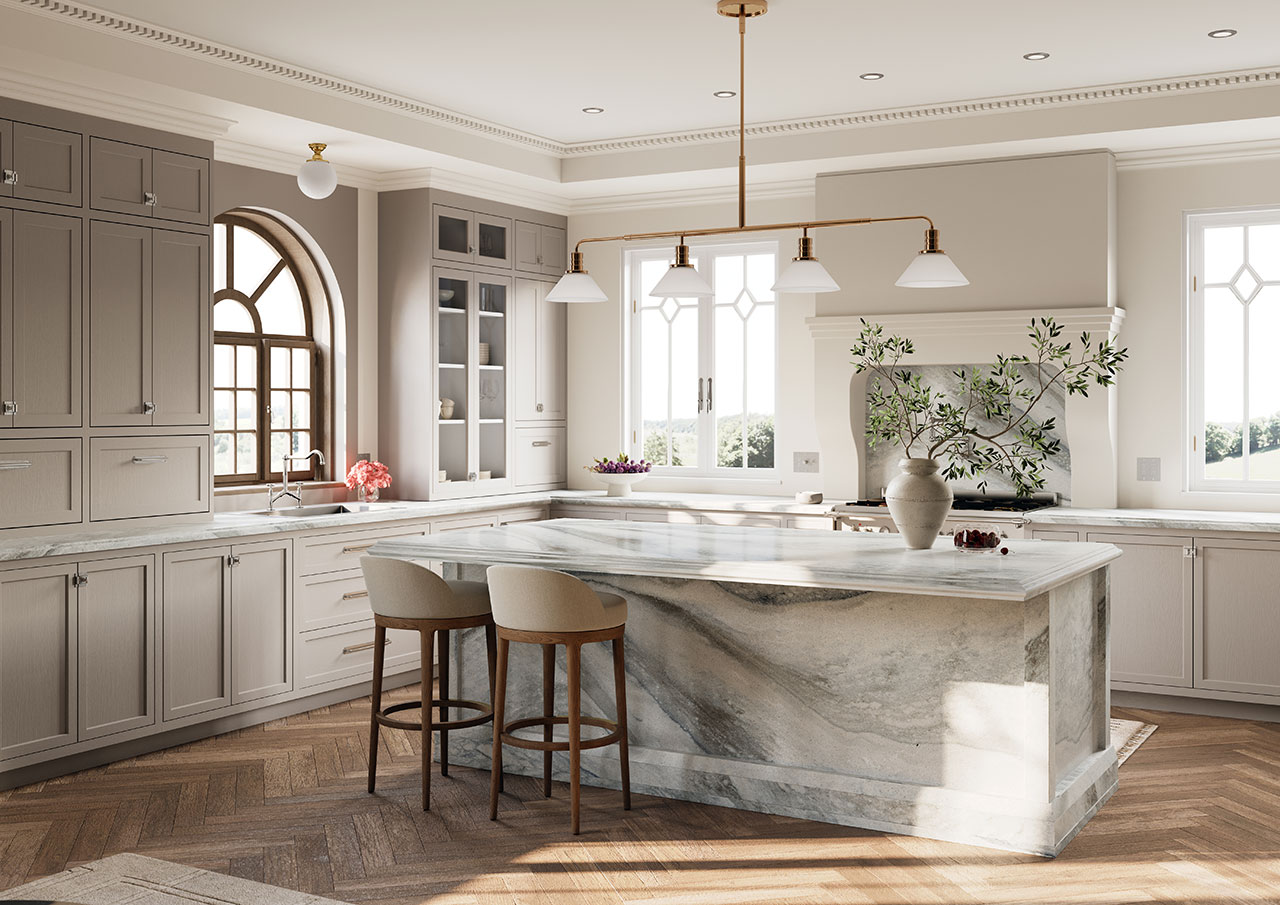
Natural stone countertops, like granite and marble, need to be sealed. Engineered and manufactured surfaces like quartz, porcelain, laminate, and solid surface don’t.
That’s the short answer, but the details matter: sealing frequency varies by material, color, and use, and choosing the wrong sealant can cause more problems than it solves. Here’s what you need to know for every popular countertop material, plus a comparison table and water drop test pros use to determine when it’s time to reseal.
Key Takeaways
- Granite requires sealing every 1-3 years; lighter, more porous colors may need attention every 6-12 months in a high-use kitchen.
- Marble is more porous than granite and needs sealing every 6-12 months.
- Quartz, porcelain, laminate, and solid surface are non-porous and never require sealing.
- Use the water drop test to determine when natural stone needs a reseal — it’s more accurate than following a fixed calendar.
Countertop Porosity Overview & Why Sealing Matters
Porosity determines whether a countertop can absorb liquids and, therefore, whether sealing is necessary. Natural stones like granite and marble have microscopic pores that allow liquids to seep into the surface. Leave those pores unprotected, and water, oil, wine, coffee, and bacteria can work their way in and cause staining that’s difficult or impossible to reverse.
| Countertop Porosity: The measure of how easily a material’s surface absorbs liquids, determined by the size and density of its internal pore structure. Higher porosity means faster absorption and greater staining risk. |
Engineered and manufactured surfaces (quartz, porcelain, laminate, solid surface) are non-porous. They don’t hav open pores for liquids to enter, which means sealing isn’t required and, in many cases, wouldn’t be effective if applied anyway.
For high-use kitchens where heavy cooking and entertaining are part of the picture, porosity is one of the first countertop specifications worth understanding before you commit to a material.
Countertop Sealing at a Glance
| Material | Sealing Required? | How Often? | Stain Risk (Unsealed) |
| Granite | Yes | Every 1-3 years (every 6-12 months for light colors) | Moderate-High |
| Marble | Yes | Every 6-12 months | High; etching risk also present |
| Quartz | No | Never | Very Low |
| Porcelain | No | Never | Very Low |
| Laminate | No | Never | Low-Moderate |
| Solid Surface | No | Never | Low |
Do Granite Countertops Need to Be Sealed?
Yes. Granite is a natural stone with a porous surface, and periodic sealing is required to keep it protected. Without a proper seal, liquids penetrate the stone’s microscopic pores and cause staining that can be difficult to reverse. This is especially true in active prep zones where cooking oils, coffee, and acidic substances are part of daily use.
Unsealed granite pores can also trap moisture and residue from food prep, which is worth considering on surfaces used daily. A quality penetrating sealer closes those pores and keeps the surface both stain-resistant and hygienic. The good news is that sealing granite is a straightforward DIY process that takes under an hour.
How Often Do Granite Countertops Need to Be Sealed?
Most granite countertops should be resealed every one to three years, though the right schedule depends on several factors: the stone’s porosity, its color, the intensity of daily use, and the type of cleaners regularly used on the surface.
Lighter-colored granite tends to be more porous and may need sealing every six to twelve months in a busy kitchen. Darker, denser slabs are naturally less porous and often go two to three years between applications. Acidic cleaning products degrade sealant faster, so kitchens using harsh cleaners will need more frequent attention. For bathroom vanities and lower-traffic surfaces, every two to three years is often reasonable.
|
Pro Tip A generic “seal once a year” rule doesn’t account for your specific stone. The water drop test (covered in its own section below) is far more accurate than any fixed schedule for knowing when your granite needs attention. |
Do Marble Countertops Need to Be Sealed?
Yes, marble is even more porous than most granite varieties, which makes it more vulnerable to staining from everyday spills. There’s also an important distinction that granite doesn’t share: sealing protects marble from liquid absorption and staining, but it does not prevent etching.
| Countertop Etching: Etching is surface damage caused by acidic substances (lemon juice, wine, vinegar, even some common soaps) that chemically react with the calcium carbonate in marble and leave dull, slightly pitted marks on the surface. Sealing won’t stop that. |
For customers choosing marble in a high-use kitchen, being upfront about both the sealing requirement and the etching risk matters. A well-maintained marble surface can stay beautiful for decades, but it demands a higher level of ongoing care than any engineered alternative.
How Often Do Marble Countertops Need to Be Sealed?
Most marble countertops should be sealed every six to twelve months. That’s a tighter schedule than granite because marble is more porous and absorbs liquids faster. High-traffic kitchen surfaces benefit from sealing closer to the six-month end of that range; lower-use areas like bathroom vanities can typically go the full year.
Do Quartz Countertops Need to Be Sealed?
No. Quartz countertops are engineered to be non-porous and never require sealing. Natural quartz particles are bonded with resin during manufacturing, leaving no open pores for liquids, oils, or bacteria to enter. The result is a surface that’s inherently stain-resistant, easy to clean, and maintenance-free.
Cambria® is one of the most recognized names in premium quartz, available through Northern Building Supply. What distinguishes Cambria is that its non-porous construction is backed by a transferable lifetime warranty — one that doesn’t require sealing maintenance to keep valid. For homeowners who want the aesthetic of natural stone without the upkeep, Cambria delivers high-end appearance without an ongoing maintenance obligation.
The only care Cambria quartz requires is warm water, mild dish soap, and a microfiber cloth. No sealers. No annual resealing schedule. No water drop tests.
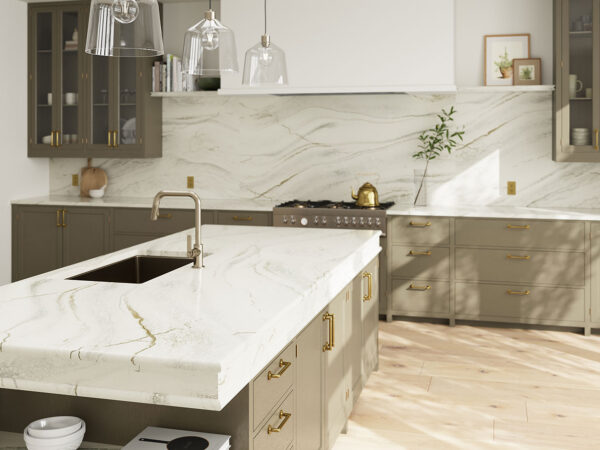
Pictured: Cambria Inverness Everleigh™
|
Our Experience For Northern Michigan waterfront homes, where kitchens see heavy seasonal use and large gatherings are the norm, Cambria quartz is one of our most-recommended surfaces precisely because maintenance never has to be a concern. Shop Cambria countertops → |
Do Porcelain Countertops Need to Be Sealed?
No. Porcelain countertops are non-porous and require no sealing. Manufactured by firing clay and minerals at extremely high temperatures, porcelain achieves a near-zero absorption rate; liquids, acids, and staining agents sit on the surface rather than penetrating it.
Dekton by Cosentino, available through Northern Building Supply, is a leading ultra-compact porcelain surface engineered for demanding applications. Dekton is non-porous, highly heat-resistant, UV-stable, and available in large-format slabs that suit the open, high-design kitchens common in Northern Michigan luxury builds. It requires no sealant to maintain its performance or appearance. Dekton is also one of the few countertop materials that performs reliably in both indoor and outdoor kitchen applications.
Do Laminate Countertops Need to Be Sealed?
No. Laminate countertops are non-porous and don’t require sealing. The surface layer doesn’t absorb liquids, meaning regular cleaning is all that’s needed for day-to-day maintenance.
Wilsonart® and Formica®, available through Northern Building Supply, are two of the most established laminate brands in the market, offering an extensive range of finishes, textures, and patterns, many of which convincingly replicate the look of stone, wood, or concrete. Neither requires sealing, and both maintain their appearance with straightforward soap-and-water care. Wilsonart in particular offers solid surface and quartz options alongside laminate, giving clients more flexibility within a single trusted brand family.
For projects where countertop budget needs to stretch, today’s laminate options are a meaningful step up from what the category looked like a decade ago.
Do Solid Surface Countertops Need to Be Sealed?
No. Solid surface countertops, including those made by Corian® (available through Northern Building Supply), are non-porous and don’t require sealing. They resist staining and moisture without any additional treatment, similar to quartz and porcelain.
What makes solid surface distinctive is repairability. Minor scratches and surface damage can often be sanded or buffed out, restoring the countertop’s original appearance without professional intervention. That’s a meaningful advantage over natural stone, where surface damage typically requires fabricator restoration. For lakefront properties that see heavy seasonal traffic (i.e. surfaces take more wear over a short period) the ability to refresh a countertop on-site without a significant service call has a lot of value.
Need Help Designing Your Dream Kitchen?
Our team of talented designers would love to talk style, show you samples, and bring your vision to life.
The Water Drop Test: How to Know When It’s Time to Reseal Natural Stone Countertops
The water drop test is the most reliable field method for determining whether natural stone needs resealing. Place a few drops of water on the counter and let it sit for 30 minutes. If the water beads up and rolls off, the seal is intact and you’re fine. If the water absorbs into the stone and darkens the surface, it’s time to reseal.
A few tips for getting accurate results:
- Test in multiple spots, particularly in high-use prep zones. Those areas wear faster than decorative surfaces or near the edges.
- Slight darkening that lightens as the water evaporates suggests you’re approaching the end of your seal’s life; deeper darkening that lingers means reseal promptly.
- Track the date of each resealing so you can establish a realistic schedule for your specific stone.
This test only applies to natural stone. Quartz, porcelain, laminate, and solid surface don’t absorb water, so the drops will always bead. That’s not the seal working. That’s just the material.
Penetrating vs. Topical Sealers: Which Is Right for Countertops?
For countertops, penetrating (impregnating) sealers are the correct choice. Topical sealers are generally not recommended for kitchen use.
- Penetrating sealers soak below the stone’s surface and bond with its pores, blocking moisture from within without changing the stone’s appearance, finish, or texture.
- Topical sealers form a protective film on top of the stone’s surface. Topical sealers can alter sheen, wear unevenly, and require stripping before reapplication — none of which is practical for a working kitchen countertop.
Penetrating impregnators are the standard choice for countertop installations. They protect without altering the look of the stone, allow the surface to breathe (which helps prevent moisture from becoming trapped beneath), and last significantly longer than surface coatings in high-traffic applications. If you’re purchasing a sealer for granite or marble, look for the words “penetrating” or “impregnating” on the label.
The Right Countertop Starts With Knowing the Maintenance It Requires
Sealing requirements vary more across countertop materials than most homeowners realize going into a selection. Granite and marble can be stunning choices, but they come with a maintenance commitment that should be part of the conversation from day one. Quartz, porcelain, laminate, and solid surface offer a low-maintenance alternative without sacrificing design quality.
At Northern Building Supply, our team helps contractors and homeowners across Northern Michigan select the right countertop material for their build, their lifestyle, and their long-term maintenance expectations.
Ready to explore your options? Contact us online or stop in to talk with our team.
Frequently Asked Questions About Countertop Sealing
Can you seal countertops yourself, or do you need a professional?
Most homeowners can seal granite themselves without professional help. The process involves cleaning the surface thoroughly, applying a penetrating stone sealer with a clean cloth or applicator, letting it absorb for the time specified on the product label, then wiping off any excess before it dries. Budget about an hour and plan for a 24-hour cure time before returning the surface to normal use.
Will sealing change how my countertops look?
A penetrating (impregnating) sealer should not change the appearance of natural stone — that’s one of the reasons professionals prefer it over topical coatings. Topical sealers, by contrast, can add an artificial gloss or alter the sheen of the stone. If maintaining the natural look of your granite or marble matters, verify the sealer you’re using is labeled as a penetrating or impregnating type.
How soon after installation should granite be sealed?
New granite countertops should be sealed before or immediately after installation, ideally before the surface sees any use. Most fabricators apply an initial seal as part of the installation process. If yours didn’t, or if you’re unsure, seal within the first week. Don’t wait for a spill to find out the surface wasn’t protected.
Can you seal a countertop that already has stains?
Sealing over an existing stain locks it in permanently. If the surface has staining, it needs to be addressed with a poultice (a paste-like drawing compound that pulls the stain out of the stone’s pores) before any sealer is applied. Once the stain is removed and the surface is clean and dry, then seal. Applying sealer first is a common and irreversible mistake.
What cleaning products should you avoid on granite countertops?
Acidic cleaners (vinegar, lemon-based sprays, bleach, and anything marketed as a “bathroom disinfectant”) degrade sealant faster and will shorten the time between resealing. Abrasive scrubbers can also scratch the surface.
For daily maintenance, mild dish soap and warm water are all a properly sealed granite countertop needs. Avoid the specialty “granite cleaners” that aren’t pH-neutral; they often do more harm than good.
How long does countertop sealant take to cure after application?
Most penetrating stone sealers require 24 hours of cure time before the countertop returns to normal use. Some professional-grade formulas specify a shorter window, but 24 hours is a safe general rule. Avoid placing items on the surface, using water, or putting the countertop through heavy use during that window. Rushing the cure time reduces how long the seal holds.