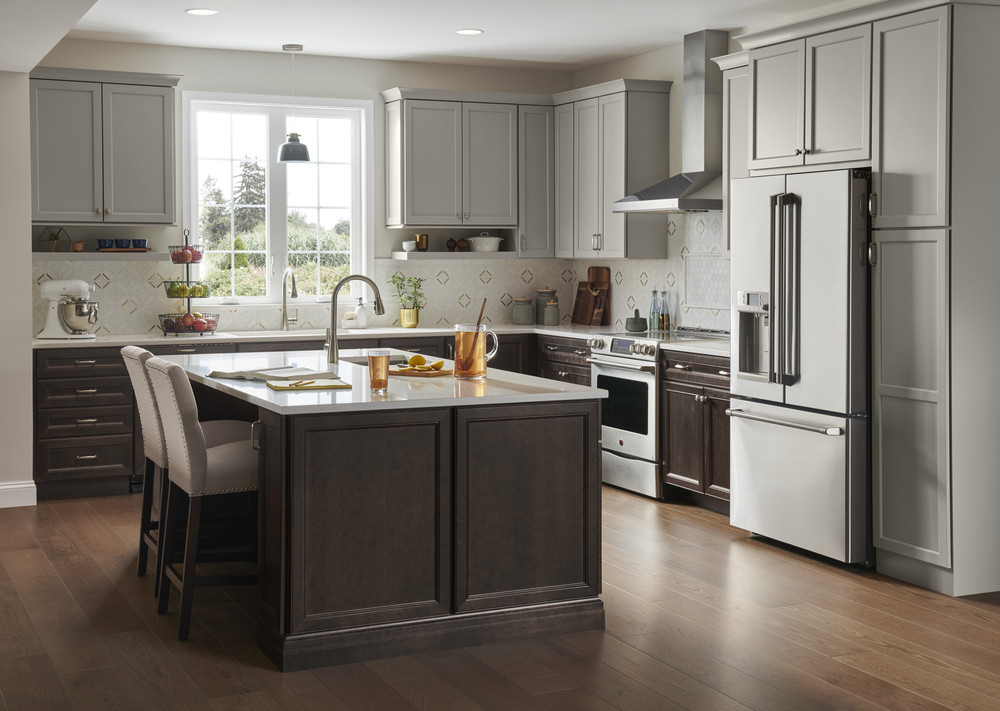
Inset cabinets have doors and drawers that sit flush inside the cabinet frame, while overlay cabinets have doors that mount on top of the frame. That structural difference affects how a kitchen looks, how much it costs, and how demanding it is to install correctly.
This explains the three major cabinet styles (inset, full overlay, partial overlay), compares them side by side, and helps you match each style to the right kitchen aesthetic.
Key Takeaways
- Inset cabinets sit flush inside the face frame; overlay cabinets mount on top of it.
- Inset cabinetry typically costs 15-30% more than comparable overlay styles, based on quotes across our Yorktowne Cabinetry line.
- Full overlay is the most common cabinet style in modern kitchens.
- Partial overlay is the most budget-friendly cabinet style.
Inset vs. Full Overlay vs. Partial Overlay Cabinets Comparison
| Inset | Full Overlay | Partial Overlay | |
| Appearance | Doors flush with face frame; furniture-grade, precise look | Doors cover most of frame; clean surface | Doors cover part of the frame; more frame visible between doors |
| Cost Tier | Highest | Mid-range | Most affordable |
| Precision Required | Very tight | Moderate | Lower (most forgiving) |
| Compatible Construction | Face-frame only | Face-frame and frameless | Face-frame only |
| Best Application | Custom and high-end builds | Modern, transitional, and semi-custom kitchens | Entry-level builds, farmhouse aesthetics, budget renovations |
| Aesthetic Match | Traditional, shaker, high-end transitional | Contemporary, modern, clean-lined | Farmhouse, cottage, budget-conscious traditional |
What Are Inset Cabinets?
Inset cabinets are built so the doors and drawers fit directly inside the face frame of the cabinet box, sitting flush with the surrounding wood when closed. There’s no overlap or recess; the door fills the opening precisely, edge to edge, flush with the frame.
This construction method has roots in traditional furniture-making. Inset cabinets carry a distinctly handcrafted quality:
- Hinges are typically exposed (a deliberate decorative choice).
- The lines between door and frame are tight and intentional.
- The overall effect reads as custom regardless of the finish.
It’s the style most associated with high-end transitional kitchens, traditional designs, and spaces where cabinetry is meant to look and feel like built furniture.
The tradeoff is precision. Because the door must fit perfectly inside the opening, manufacturing tolerances are considerably tighter than with overlay cabinets, and installation demands a square, plumb, level environment. Any deviation is visible. That’s why inset cabinets carry a higher price point than comparable overlay styles.
What Are Full Overlay Cabinets?
Full overlay cabinets have doors that cover nearly the entire face frame, leaving only a slim reveal (typically 1/8 to 1/4 inch) visible between adjacent doors when closed. The result is a clean, continuous surface that reads as streamlined and modern.
This is the dominant style in new kitchen construction. Full overlay works across a range of aesthetics, from contemporary to transitional, and pairs naturally with both face-frame and frameless cabinet construction.
|
Face-frame vs. Frameless Construction Face-frame cabinets have a solid wood frame attached to the front of the cabinet box. Frameless cabinets (sometimes called European-style) skip the frame entirely. The door attaches directly to the box sides.
Full overlay doors work with both systems. Partial overlay and inset, however, require a face frame, since the frame itself is what the door either sits inside of (inset) or partially covers (partial overlay). |
Full overlay is also more forgiving during installation than inset. Doors can be adjusted after hanging to compensate for minor variations in wall plumb or floor level.
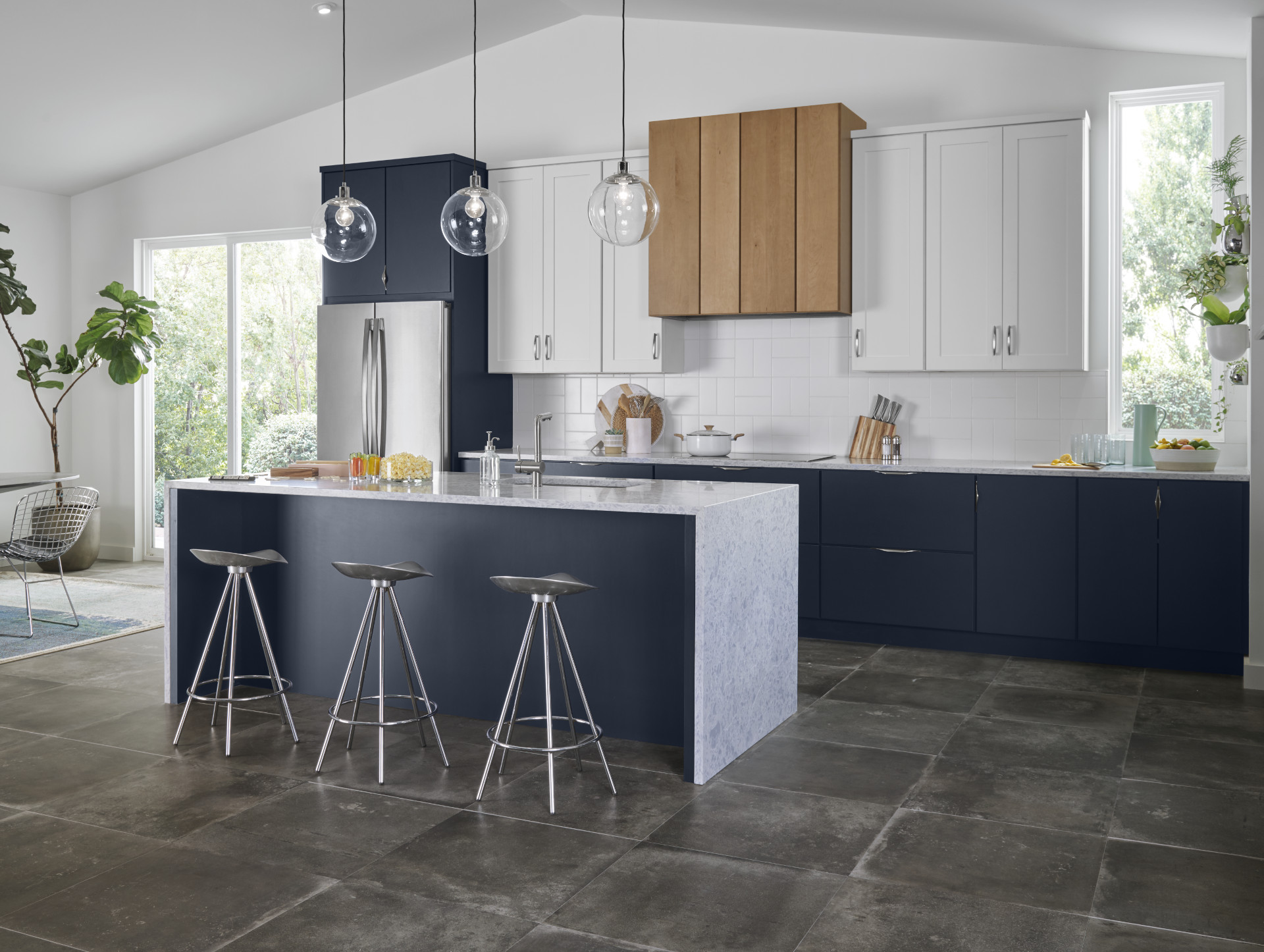
Pictured: Yorktowne Cabinetry
What Are Partial Overlay Cabinets?
Partial overlay cabinets have smaller doors that cover only part of the face frame, leaving a wider band of frame wood visible between each door and drawer. This is the most budget-friendly of the three styles, and it’s most commonly found in older kitchens, entry-level builds, and renovations where the face frame itself serves as a visible design feature.
Partial overlay isn’t necessarily a compromise. In farmhouse kitchens and traditionally styled spaces, the exposed frame reads as intentional — cottage-like, even — and pairs well with open shelving, painted cabinetry, and architectural details like shiplap or beadboard walls.
Thinking About Purchasing Cabinets?
In this guide, our experts walk through the process, plus tips for selecting a style that’s best for your space.
Which Cabinet Style Is Right for Your Aesthetic?
Your cabinet style choice should follow your design direction, along with your budget and practical constraints.
Choose inset for traditional, shaker, and high-end transitional kitchens. These are spaces where cabinetry is meant to be a design centerpiece, where exposed hinges, furniture-grade detailing, and a flush, precise fit are all part of the intent. Think warm wood tones, crown molding, panel-ready appliances, and kitchens that feel like they were designed to last decades.
Choose full overlay for modern, contemporary, and clean-lined designs. The minimal visible frame and continuous door surface complement handleless hardware, flat-panel or slab doors, and neutral or bold palettes alike. Full overlay is also the most versatile of the three and works across a wider range of styles without looking out of place.
Choose partial overlay for farmhouse kitchens, cottage-style spaces, and projects where the visible face frame reads as a design feature rather than a limitation. It’s also the practical choice when a larger renovation project requires dollars to stretch across multiple rooms or categories.
Featured Brand: Yorktowne
Yorktowne Cabinetry offers both inset and overlay door constructions across three collections (Classic, Historic, and Iconic). Yorktowne is available at all Northern Building Supply locations, which means Northern customers have access to the full range of styles covered in this article and personalized kitchen design services.
With over 110 years of American craftsmanship behind it, Yorktowne builds in a range of wood species including maple, cherry, oak, and hickory, with finish options spanning painted, stained, and glazed. Whether a project calls for a shaker inset door in a warm heirloom finish or a slab full overlay in a crisp painted white, the brand has the depth to deliver.
Frequently Asked Questions about Cabinet Door Styles
What is the most popular cabinet door style?
Full overlay is the most commonly specified cabinet construction style in modern new builds and kitchen renovations, valued for its clean-lined look and installation flexibility.
Among door profiles, shaker remains the most popular choice across all construction types. Its simple recessed-panel design pairs well with inset, full overlay, and partial overlay alike.
Are inset cabinets worth the extra cost?
For the right kitchen, yes. Inset cabinets deliver a furniture-grade, flush finish that overlay styles can’t replicate. The exposed hinges, tight frame fit, and built-from-furniture construction read as custom. The 15–30% cost premium is most justified in traditional, shaker, or high-end transitional kitchens where that level of detail is part of the design intent. In modern kitchens, full overlay typically achieves the same clean result at a lower price point.
Are inset cabinets harder to install?
Yes, inset cabinets require the cabinet box to be square, the wall to be plumb, and the floor to be level. Any deviation becomes visible once the door is hung. Full and partial overlay doors allow more room for adjustment during and after installation, making them more forgiving in real-world conditions where walls and floors aren’t perfectly true.
What’s the difference between full overlay and partial overlay cabinets?
Both styles have doors that mount on top of the face frame, but full overlay doors are larger and cover nearly all of the frame, leaving only a sliver visible between doors. Partial overlay doors are smaller, leaving a wider band of frame exposed. Full overlay is the more modern and widely used of the two; partial overlay is more traditional and budget-friendly, with a look that works well in farmhouse and cottage-style kitchens.