
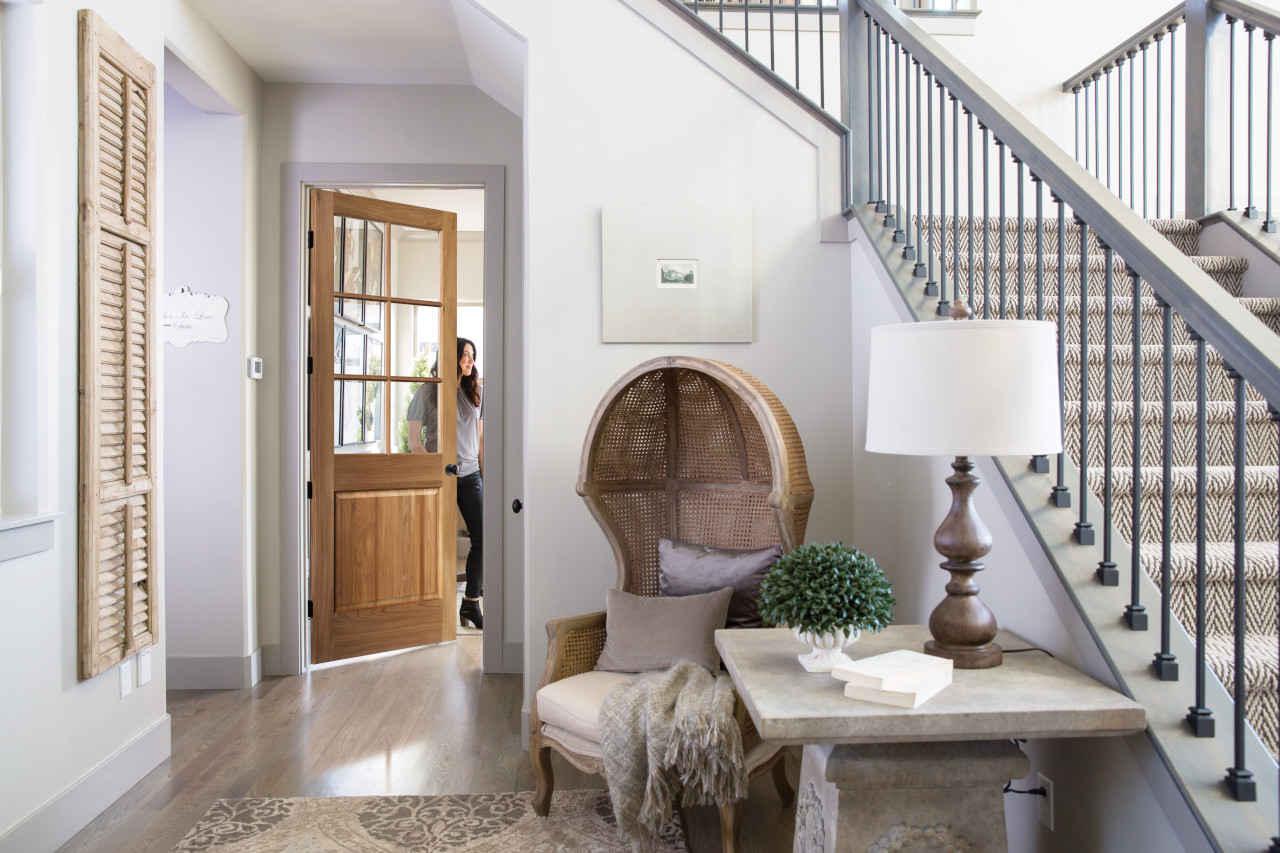
Glass panel doors are a great idea, in the right rooms. A glass door between your great room and hallway can carry sunlight deep into the house. Put that same door on a primary bath, and you may feel exposed the first night you flip on the lights. Whether glass works comes down to the room, not to glass as a category.
The choice carries more weight in Northern Michigan. According to timeanddate.com, the sun is up for just 8 hours and 47 minutes in the Traverse City area on the shortest day of the year. When daylight is that scarce, every hour you can borrow from a lakeside window counts.
This guide covers interior door glass types, a room-by-room plan, style pairings from modern to cabin, and the Masonite doors we recommend.
Key Takeaways
- Choose glass by room: clear for shared spaces, obscured for private ones.
- Reeded and frosted glass pass most of the light with far more privacy than clear.
- Glass panels lower a door’s sound control.
- Masonite offers glass panel doors for modern, transitional, and cabin homes.
Differences Between Interior Doors With Glass Panels and Solid Doors
Interior doors with glass panels swap some or all of the door’s panels for glass, so light passes from one room to the next. Solid doors block light and sightlines completely. Everything else, from privacy to sound control to the overall look, flows from that one difference.
|
Definition: Lite A lite is a single pane or section of glass set into a door. A “1-lite” door has one large glass panel; a “15-lite” door has fifteen small panes divided by wood bars. |
Here’s where homeowners often get tangled up. “Solid core” describes what’s inside a door, not whether it has glass. Glass panel doors are usually built with a stile-and-rail frame (vertical and horizontal wood pieces around the glass), and those frames can be solid wood, engineered wood, or primed MDF. So the real question isn’t glass versus solid core. It’s how much of the door you want to be glass.
| Glass Panel vs. Solid Interior Doors | ||
| Feature | Glass Panel | Solid Panel |
| Light between rooms | High (varies by glass type) | None |
| Visual privacy | Low to high (varies by glass type) | Complete |
| Sound control | Lower | Higher, especially solid core |
| Visual effect | Opens up space, adds depth | Defines and separates rooms |
| Best rooms | Offices, transitions, pantries, dens | Bedrooms, bathrooms, media rooms |
A glass panel interior door works like a borrowed window. It lets an interior room with no exterior wall share light from a room that has one. For homes built around an open floor plan, a glass door keeps the separation you need for heat, noise, or focus without breaking the visual flow of the space.
Browse door styles and configurations in our interior door selection →
Which Type of Glass Is Best for Interior Doors?
For most rooms, reeded or frosted glass is the best choice because it keeps most of the light while blurring what’s behind the door. Clear glass only makes sense where you really want people to see through. Seeded glass is a style choice first and a privacy choice second.
Each glass type trades light for privacy differently. Clear glass gives the most light and no privacy. Frosted and reeded glass keep most of the brightness while obscuring what’s behind the door. Seeded glass adds character but offers little privacy, so it works best in rooms where seeing through the door isn’t a concern.
| Interior Door Glass Types Compared | ||||
| Glass Type | Light | Privacy | Look | Best For |
| Clear | Highest | None | Open, minimal | Dens, transitions, view rooms |
| Frosted (satin etch) | High | High | Soft, clean | Offices, laundry, baths |
| Reeded | High | Medium to high | Textured, modern | Offices, suites, pantries |
| Seeded | High | Low | Vintage, warm | Cabins, pantries, sunrooms |
Clear Glass
Clear glass delivers the most light and cleanest view. It’s the right pick when the door’s job is to extend a sightline, like a den that looks toward the lake or a wine room you want guests to see.
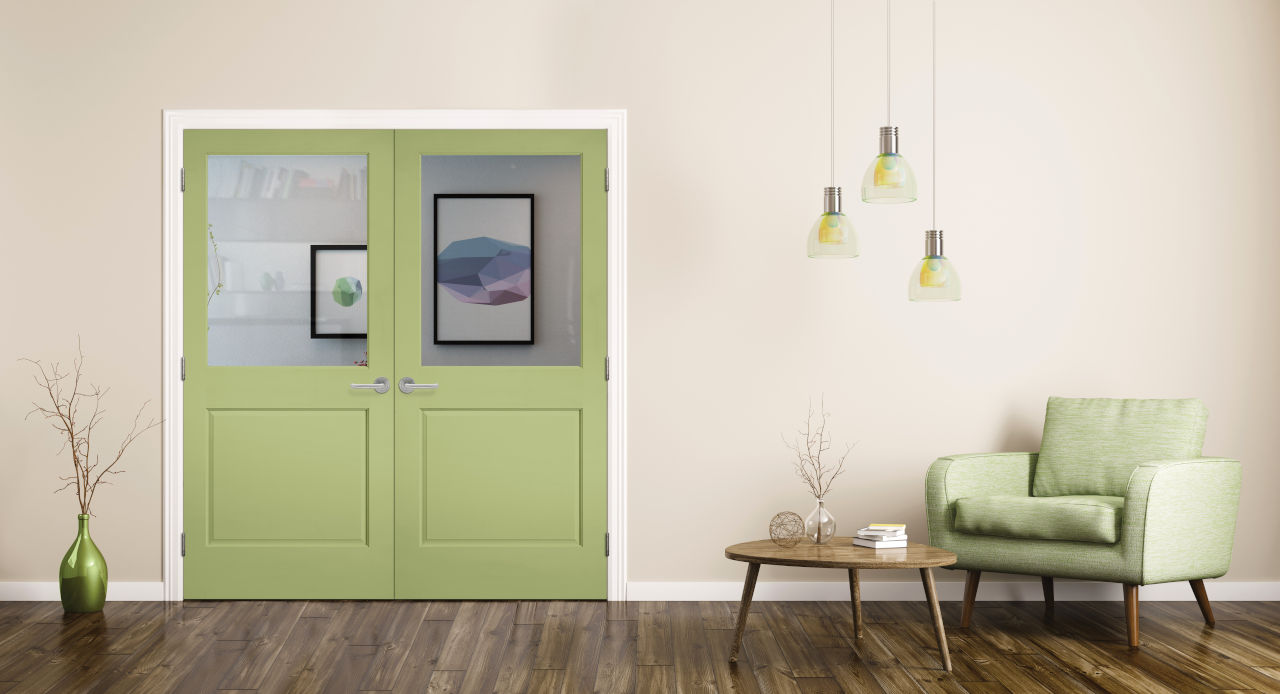
Pictured: Masonite interior door with clear glass
Frosted (Satin Etch) Glass
Frosted glass, often called satin etch, has a uniformly translucent surface that softens light and hides detail. It reads clean and quiet, which is why it shows up in so many home offices and laundry rooms.
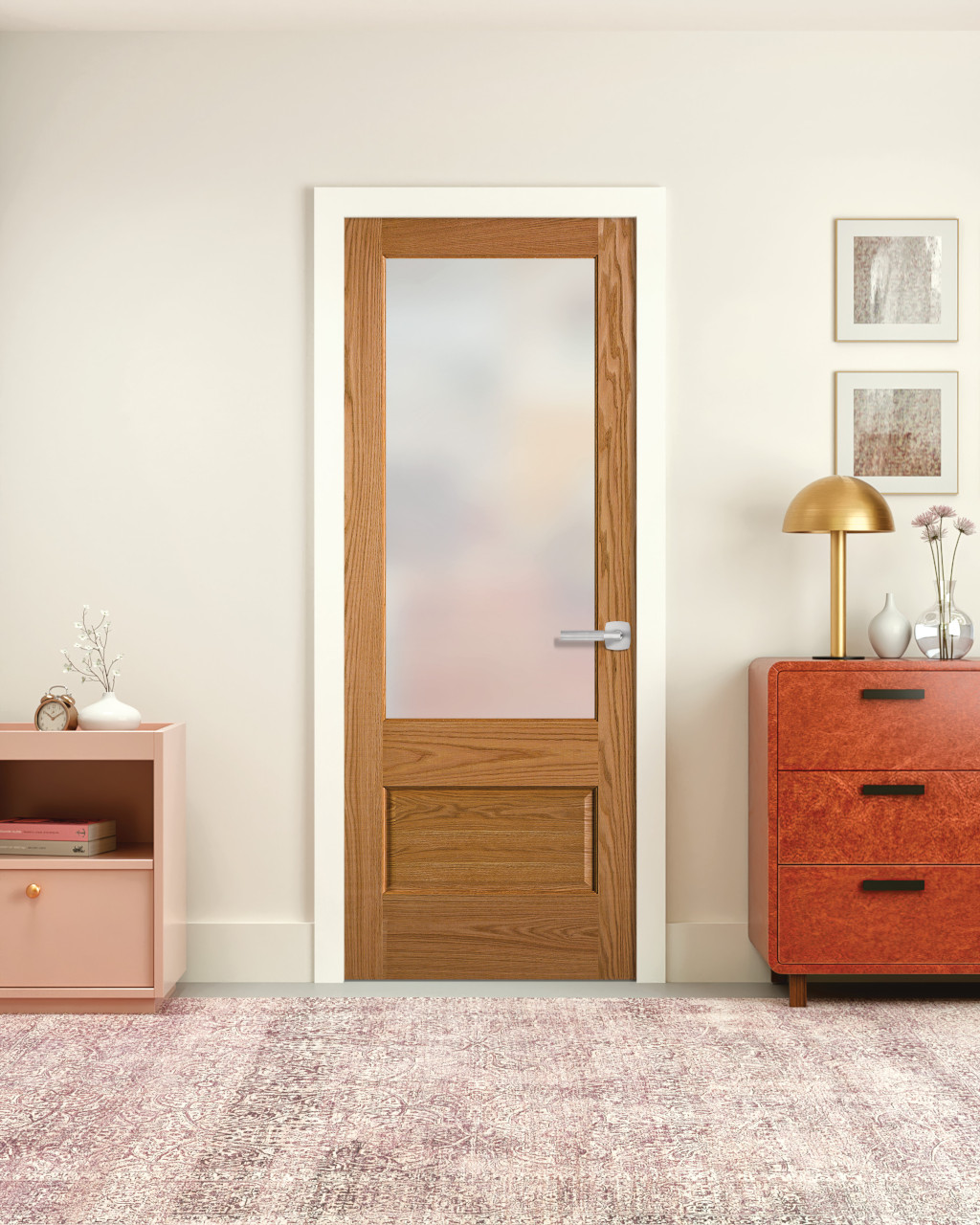
Pictured: Masonite interior door with frosted glass
Reeded Glass
Reeded glass is textured with vertical ribs that blur shapes while keeping light lively and directional. It has become a favorite in modern and transitional design because it adds pattern without adding clutter.
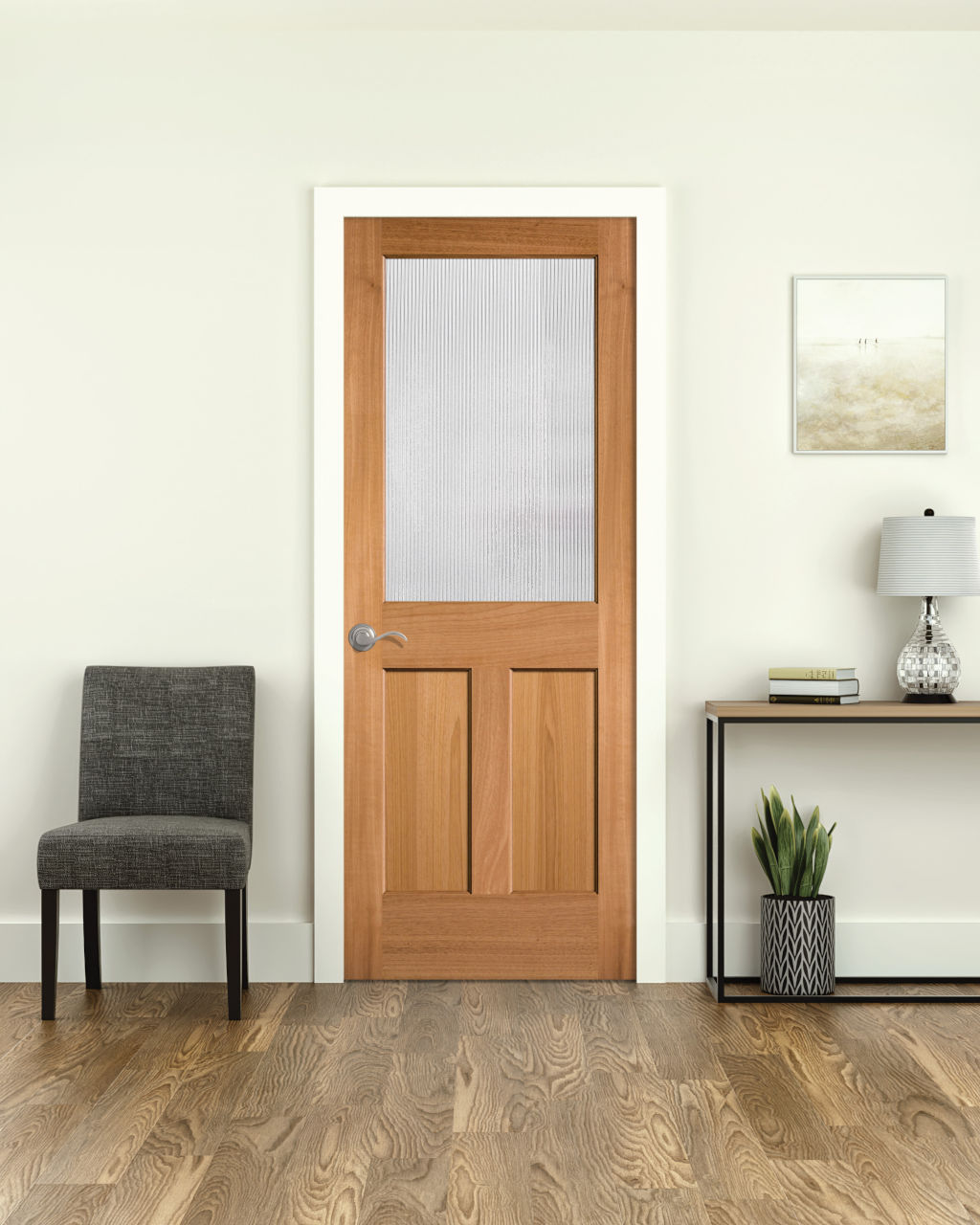
Pictured: Masonite interior door with reeded glass
|
Expert Recommendation Reeded glass is the sweet spot for lake homes. It softens light the way moving water does and keeps the clean vertical lines modern interiors depend on, all without giving anyone a clear view into private space. |
Seeded Glass
Seeded glass contains small bubbles that mimic old hand-blown glass. It offers slight privacy at best, but it brings warmth and character to cottage and cabin interiors.
Where Do Glass Panel Interior Doors Work Best? A Room-by-Room Guide
Glass panel interior doors work best in shared, daytime spaces like dens, offices, and pantries, and least well in rooms that need complete privacy. A good rule of thumb: the more private the room, the more the glass should obscure, up until a solid door becomes the best answer.
| Matching Glass Type to Each Room | ||
| Room | Recommended Glass | Why |
| Great room / den | Clear | Extends views and light |
| Home office | Reeded or frosted | Light with call-ready privacy |
| Primary suite | Frosted, or solid door | Privacy comes first |
| Bathroom | Frosted or solid door | Privacy day and night |
| Pantry / laundry | Seeded or frosted | Character and borrowed light |
Great Room and Entry Transitions
This is where clear glass earns its place. French doors between a great room and a den or sunroom keep the outdoor view connected through the whole main floor.
Home Office
Reeded or frosted glass lets you close the door for a video call without turning the office into a cave. If quiet matters as much as light, read the sound section below before you make your final decision.
Primary Suite
A glass door into a primary suite works best when it opens to a sitting area or hallway, not directly onto the bed. Choose heavily obscured glass, or save glass for the closet or bath entry inside the suite.
Bathroom
Most bathrooms are better served with a solid door. If you love the look, choose heavily frosted glass and pair it with a privacy lock.
Pantry and Laundry
These are low-stakes spots to experiment. A seeded or frosted pantry door adds character to a kitchen and helps you find things without flipping on a light.
|
💡Pro Tip Two things many guides skip. First, a clear-glass door at the end of a hallway can extend a lake view line through the entire house, so think about where the door sits in a sightline, not only what room it closes. Second, glass that looks private at noon can show silhouettes at night when the room behind it is lit. Before you commit to glass in a bathroom or suite, picture it at 9 p.m. in January. |
Planning a primary bath or suite refresh? Our designers can help you work through layout and door placement together. Explore our design services →
How Do You Match Glass Panel Interior Doors to Your Home’s Style?
Let the frame profile and glass pattern follow your home’s architecture. Modern homes want thin profiles and reeded or frosted glass, transitional homes suit shaker-style frames, and cabin homes come alive with stained wood and seeded or multi-lite glass.
Modern Glass Doors
Choose a full-lite door with a narrow frame, reeded or frosted glass, and a painted finish in black, deep charcoal, or crisp white. Matte black lever hardware keeps the lines clean.
Transitional Glass Doors
Shaker-style frames with a single lite or simple divided lites bridge classic and contemporary. Pair them with frosted glass, a soft white or greige finish, and satin nickel or brushed brass hardware.
Rustic and Cabin Glass Doors
Stained wood French doors in 10 or 15 lites feel right at home in a log or timber-frame cabin. Seeded or clear glass, warm wood tones, and oil-rubbed bronze or black hardware finish the look.
Do Glass Panel Doors Block Sound as Well as Solid Doors?
No. Glass panel doors let more sound through than solid doors, but the gaps around a door often leak more sound than the glass itself. In a door flanking case study, Commercial Acoustics reported that standard hollow-core interior doors test at STC 24 to 32, while solid-core doors test at STC 32 to 36. Single-pane glass doors test at STC 20-27.
|
Definition: STC (Sound Transmission Class) STC is a rating of how well a building element blocks airborne sound. The higher the number, the quieter the room on the other side. |
Glass panels typically pull a door toward the lower end of that range. If your office needs to be both bright and quiet, look for a solid wood stile-and-rail frame, laminated glass, and weatherstripping with a door sweep. Is the room mainly for focus work or calls? Then a solid-core door with a glass transom, a horizontal glazed window panel that sits directly above the door frame, can be the better compromise.
Featured Brand: Masonite Glass Panel Interior Doors
Masonite is one of North America’s best-known interior door manufacturers, and it’s the brand we lean on for glass panel interior doors at Northern Building Supply. The lineup covers nearly every style and privacy level on this guide, from fully clear French doors to obscured glass for private rooms.
A few Masonite options worth knowing:
- Wood interior doors with glass panels: Masonite’s real wood doors come in configurations from a full-lite door to a 15-lite French door, ideal for stain-grade cabin and transitional homes.
- 5-lite solid wood barn door slab with satin etch glass: Built with a reinforced top rail for barn door hardware, with tempered, obscured glass for privacy.
- Safe ‘N Sound solid core doors: For bedrooms or offices where quiet comes first, these give you a matching solid option alongside your glass doors.
Masonite’s approach makes it easy to mix glass and solid doors without the house feeling inconsistent. You can run the same frame style throughout, then choose clear, frosted, or solid panels room by room based on how private each space needs to be.
Find the Perfect Glass Panel Door at Northern Building Supply
Glass panel interior doors are one of the simplest ways to bring more natural light into a Northern Michigan home. Want to see how glass looks like in your own light? Stop by our Traverse City or Suttons Bay showroom, or contact us online to start planning.
Frequently Asked Questions About Glass Panel Interior Doors
Is the glass in interior doors tempered?
Yes, code requires it. Glass in swinging, sliding, and bifold doors is a hazardous location that requires safety glazing. That means tempered or laminated glass, which breaks far more safely than standard glass.
Are glass panel interior doors more expensive than solid doors?
Usually, yes. Glass adds material and labor compared with a molded panel door, and decorative glass like reeded or seeded costs more than clear or frosted. Stain-grade wood frames also cost more than primed MDF. The gap narrows if you’re comparing a glass door with a premium solid wood door.
Can I replace a solid interior door with a glass panel door in the same frame?
Often, yes. If the new slab matches the existing width, height, and thickness, it can hang in your current jamb. Glass doors can be heavier than hollow-core doors, though, so you may need sturdier hinges, and the hinge and latch locations have to line up. A prehung unit avoids those fit issues entirely.
How do you clean reeded glass doors?
Spray a non-abrasive glass cleaner onto a microfiber cloth rather than the glass, then wipe along the ribs, not across them. A soft-bristle brush helps lift dust from the grooves. Avoid abrasive pads, which can scratch the textured surface and leave visible haze over time.
Can glass panel doors be used as barn doors or pocket doors?
Yes. Many glass doors work as barn doors, and some are built for it, like Masonite’s 5-lite barn door slab with a reinforced top rail. For pocket doors, check that the track and hardware are rated for the door’s weight, since glass and solid wood frames are heavier than standard hollow-core doors.