
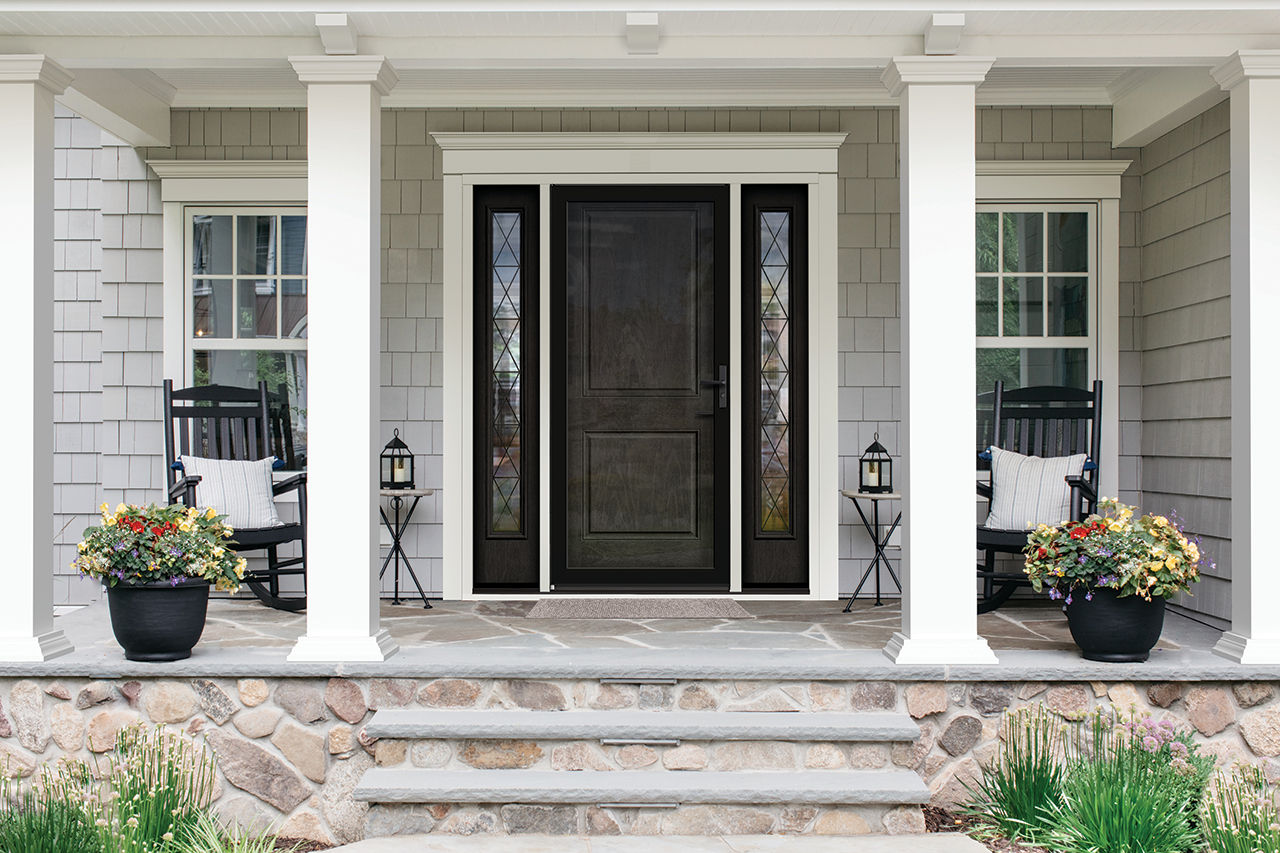
A fiberglass door is the lower-maintenance, better-insulating choice for most Northern Michigan homes. Engineered wood, like Glenview’s EuroTech doors, is the smart pick when real wood is non-negotiable. Traditional solid wood is not recommended.
Key Takeaways
- Fiberglass doors resist moisture and movement with minimal upkeep.
- Glenview’s EuroTech engineered wood keeps real-wood looks with better stability.
- Traditional wood exterior doors ask the most of their owners, demanding frequent upkeep to ensure performance and longevity.
Is Fiberglass or Wood Better for an Exterior Door in a Cold Climate?
For most Northern Michigan homes, fiberglass is the better all-around performer. Doors in Northern Michigan expand, contract, and absorb moisture on a loop, and the material that moves least keeps its seal longest. Insulated fiberglass doors R-values typically land around R-5 to R-6, while traditional wood sits far below.
|
Definition: R-value A measure of how well a material resists heat flow. The higher the R-value, the better the door insulates, so less heat escapes in the winter. |
|
Definition: Freeze-Thaw Cycling The repeated freezing and thawing of moisture in and around building materials. Each cycle can swell, shrink, and stress a door’s wood, finish, and seals. |
Fiberglass vs. Wood Exterior Door Comparison At a Glance
Fiberglass wins on insulation and upkeep, engineered wood wins on authentic looks with added stability, and traditional wood asks the most of the owner.
| Fiberglass vs. Wood Door Comparison | |||
| Factor | Fiberglass (Therma-Tru) | Traditional Solid Wood | Engineered Wood (Glenview EuroTech) |
| Insulation (R-value) | R-5 to R-6 | R-2 to R-3; varies by thickness | Insulating foam core; ask for the current spec |
| Maintenance | Clean seasonally; refresh finish as needed | Frequent inspection and refinishing, more often on exposed entries | Periodic finish care; arrives pre-finished |
| Aesthetics | Wood-grain or smooth faces | Authentic grain and depth | Real mahogany or walnut veneers |
| Cost | Mid-range | Wide range; custom is highest | Premium |
| Longevity | Won’t rot, rust, or dent | Depends on exposure and finish upkeep | Built to resist warping, splitting, and cracking |
| Finish Options | Stain or paint | Stain, paint, or clear | Factory stains and custom finishes |
Cost reflects relative tiers, not quotes. Pricing varies by size, glass, and finish, so ask a Northern Building Supply specialist for current numbers.
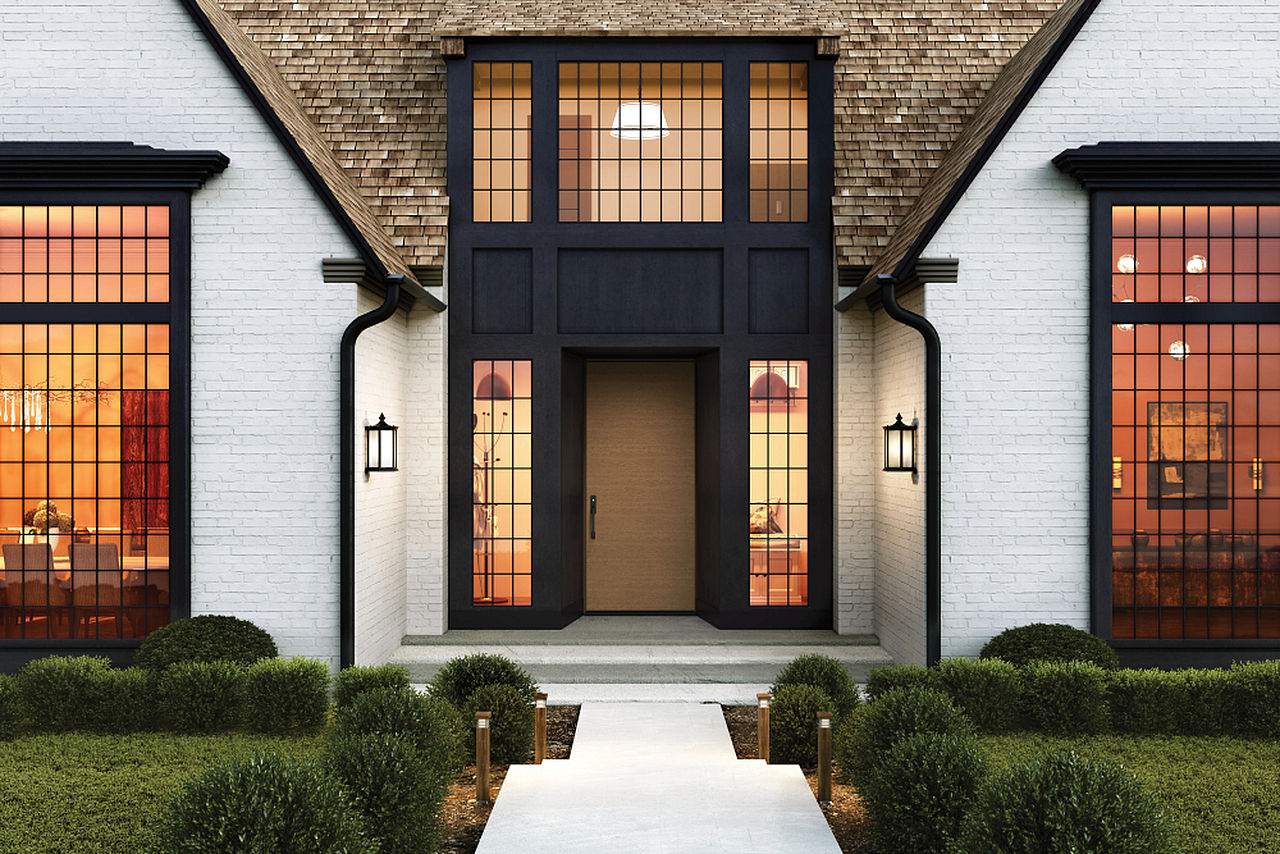
Pictured: Therma-Tru fiberglass entry door
Construction: How Are Fiberglass and Wood Exterior Doors Built?
A fiberglass door is a composite shell wrapped around an insulating foam core, while a wood door is built from solid or engineered timber.
- Fiberglass Skin + Foam Core: Therma-Tru, the top fiberglass door brand we carry at Northern Building Supply, builds its doors around a polyurethane foam core. Therma-Tru Classic Craft® construction features composite rails to protect the top and bottom edges from moisture wicking and an engineered-lumber lock stile to add weight and rigidity. Faces range from stainable wood grain to smooth, paintable finishes.
- Solid Wood + Engineered Wood: Traditional wood doors are built from solid timber, so they react to humidity and temperature like any wood. Engineered wood doors layer solid-wood edges, an insulating core, and real veneers to keep the look while limiting movement. We explain how Glenview does it below.
Performance: How Do Fiberglass and Wood Exterior Door Materials Perform in Northern Michigan?
Fiberglass resists climate stress best, engineered wood comes close, and traditional solid wood is the most vulnerable without a covered entry and regular upkeep. In a region with deep freezes, lake humidity, and fast thaws, composite-edged fiberglass and engineered constructions are designed to resist the swelling, warping, and finish failure that solid wood can develop at exposed entries.
- Thermal Expansion + Contraction: Wood swells in damp months and shrinks in dry, heated winter air, which can open gaps at the weatherstripping or bind the door in its frame. Foam-core fiberglass moves far less, so it keeps its fit through the swings.
- Moisture Absorption Near the Lake: Unprotected wood edges, especially at the door bottom, can wick moisture over time, leading to swelling, finish failure, and rot. Fiberglass doesn’t absorb water, and Therma-Tru’s composite rails are built to block that wicking.
- Warping Risk: Warping happens when one face of a door sees sun while the other sits in a cold entry. Single solid-wood slabs are the most prone to it, because one piece of timber carries the whole door. Engineered and fiberglass builds spread that load across stronger components.
|
💡 Pro Tip Exposure matters as much as material. A door under a deep porch roof lives a very different life than one facing lake wind and direct afternoon sun. Engineered construction narrows that gap, but a covered entry still stretches the life of any finish. |
Style: What Are the Aesthetic Tradeoffs Between Fiberglass and Wood Doors?
Real wood wins on authenticity, and fiberglass wins on consistency. Wood grain has natural variation and depth that’s hard to match, while modern fiberglass comes close and holds its finish with less effort. Explore popular entry door styles →
Therma-Tru’s wood-grain fiberglass accepts stain, and its smooth faces take paint, so you get rich color without the refinishing schedule. However, stained fiberglass will read slightly more uniform than a hand-selected board.
Glenview doors use real mahogany and walnut veneers across classic, modern, pivot, and aluminum-clad collections. If the point of choosing wood is the look of the real thing, is there any substitute? For many homeowners the answer is no, and EuroTech is what makes that choice practical.
About Glenview EuroTech Wood Door Construction
Glenview Doors builds its entry doors with EuroTech sandwich construction: a thermal insulating core, engineered stiles and rails, and real wood veneers. The door looks like solid wood but is designed to resist the warping, splitting, and cracking that commonly affect traditional wood doors.
|
Definition: EuroTech (Euro Technology) Glenview Doors’ sandwich construction method, pairing an insulated core with engineered wood stiles, rails, and wood veneers. |
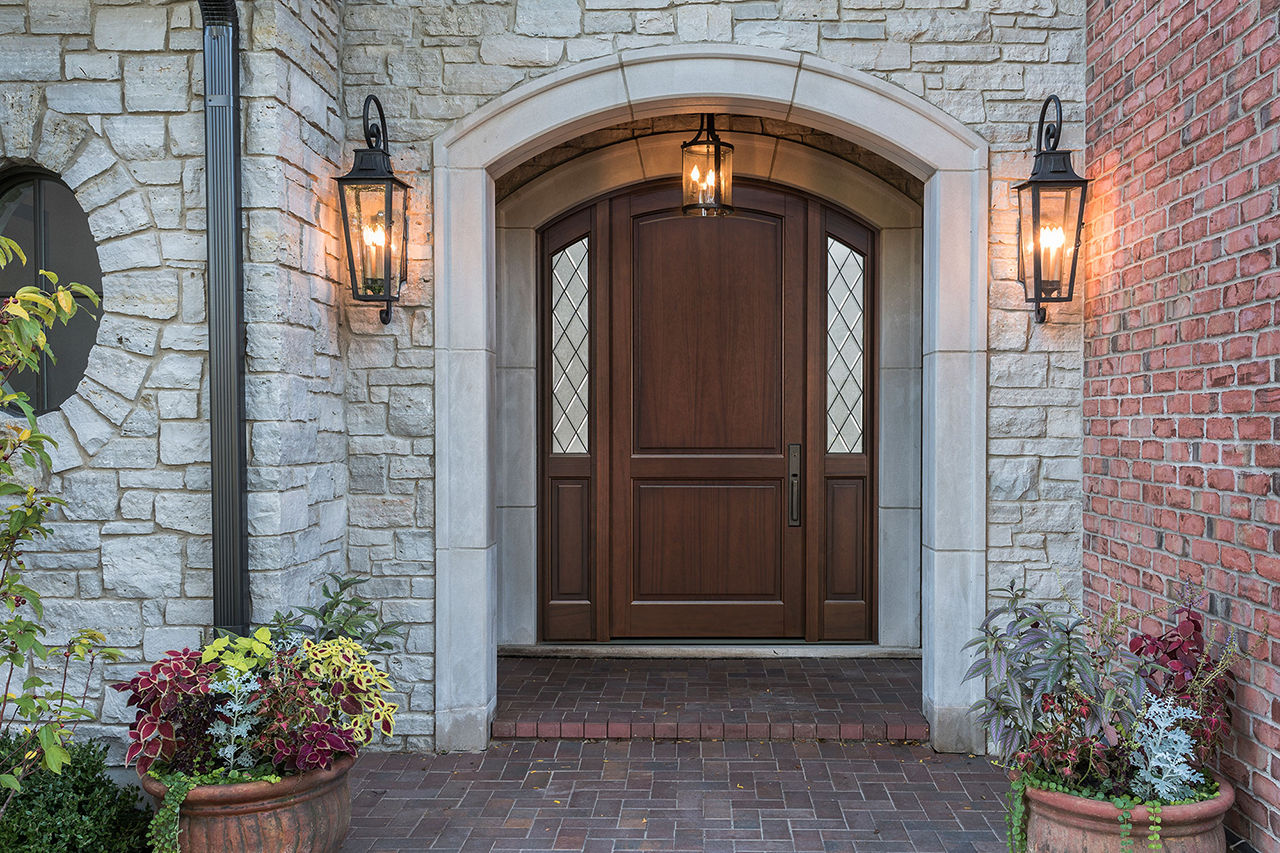
Pictured: Glenview engineered wood entry door
According to Glenview’s EuroTech overview, each feature answers a classic wood weakness:
- Movement: Engineered stiles and rails with solid mahogany edge bands are stronger than single solid pieces, and fixed panels add rigidity, which reduces warping and splitting.
- Moisture: A thin aluminum layer inside the panel sandwich acts as a moisture barrier that protects the core.
- Insulation: A rigid foam core adds thermal resistance that solid wood lacks.
- Mass: In-stock slabs measure 2 ¾ inches thick, roughly double typical solid wood entries, and arrive pre-finished and pre-hung.
When Is Each Exterior Door Material the Best Choice?
Choose fiberglass for exposed or low-maintenance entries, engineered wood for custom entries where grain matters, and traditional solid wood only where a covered entry and a finish schedule are guaranteed. The best exterior door material depends on exposure, budget, and how much upkeep you’ll take on.
- For homeowners: Fiberglass suits lakefront, north- and west-facing, and side or garage entries. Engineered wood suits a front entry where the door is the design statement.
- For contractors: Fiberglass protects margin on spec builds and repeat jobs where callbacks cost money. Glenview suits custom clients who want premium wood with predictable performance.
Find High-Performance Exterior Doors for a Comfy, Cozy Home at Northern Building Supply
For Northern Michigan, fiberglass is the dependable default, and engineered wood is the best way to get real wood without the usual risk. Match the exterior door to your exposure and upkeep, and either choice can last.
Compare Therma-Tru and Glenview in person at our Traverse City or Suttons Bay locations, or contact one of our door specialists online.
Frequently Asked Questions About Exterior Door Materials
What is the best exterior door material for a lake house?
Lakefront homes see the most moisture and wind, so low-absorption fiberglass or engineered wood with sealed edges is the safer pick. Choose a complete door system with protected edges, a quality sill, and fresh weatherstripping.
Can you stain or paint a fiberglass door?
Yes. Wood-grain fiberglass is made to accept stain, and smooth fiberglass takes paint. Use fiberglass-approved products and follow the manufacturer’s finishing instructions.
Do fiberglass doors crack in extreme cold?
Fiberglass is made to handle wide temperature ranges, and cold alone isn’t the usual cause of damage. Worn weatherstripping is a likelier culprit. Check it annually.
Do wood doors need a covered entry?
Traditional solid wood lasts longest under a deep overhang that shields it from rain, snow, and sun. Engineered wood doors like Glenview’s are more forgiving.
How do I compare door insulation ratings?
Check the NFRC label for the door’s U-factor; lower is better. Divide 1 by the U-factor to estimate R-value. Since 2023, ENERGY STAR’s Version 7.0 criteria require windowless certified doors to reach 0.17 or lower.