
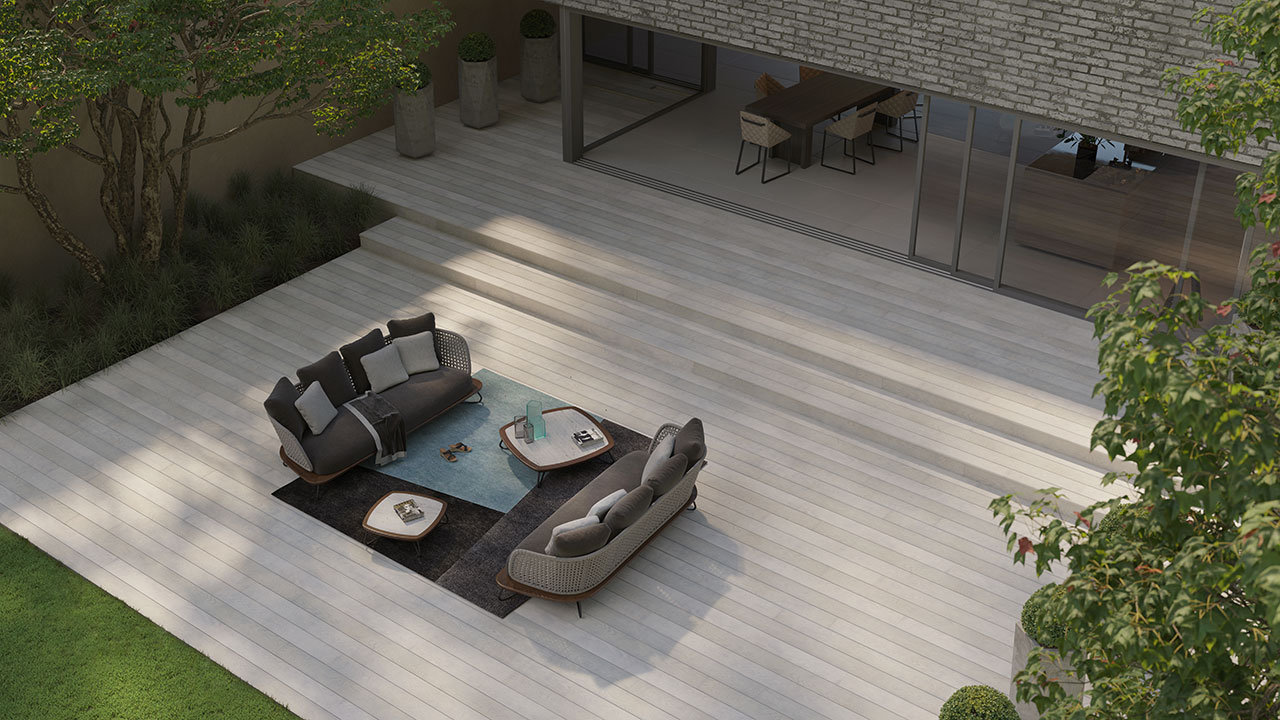
Millboard decking is a wood-free, resin-mineral composite that’s hand-molded from real oak boards. It delivers the most realistic wood grain and highest slip resistance. Traditional composite decking (like Trex®) is made from a blend of wood fiber and recycled plastic. It offers proven performance at a more accessible price point.
If you’re planning a high-end deck build, this guide explains how these two decking materials compare, what they cost, and how each performs in Northern Michigan climate.
Key Takeaways
- Millboard is a resin mineral composite (RMC): wood-free, hand-molded from real oak, and built around a polyurethane resin core.
- Traditional composite decking blends wood fiber and plastic, then caps the premium lines in a protective polymer shell.
- For luxury decking projects, Millboard’s authenticity and safety performance often justify the premium cost.
What Is Millboard Decking Made Of?
Millboard is a resin mineral composite (RMC): a wood-free material built from recycled natural minerals, polyurethane resin, and fiber reinforcement, hand-molded from real oak boards to capture authentic wood grain. According to Millboard, over a third of the material is recycled content, including reclaimed limestone, bonded into a polymer resin core.
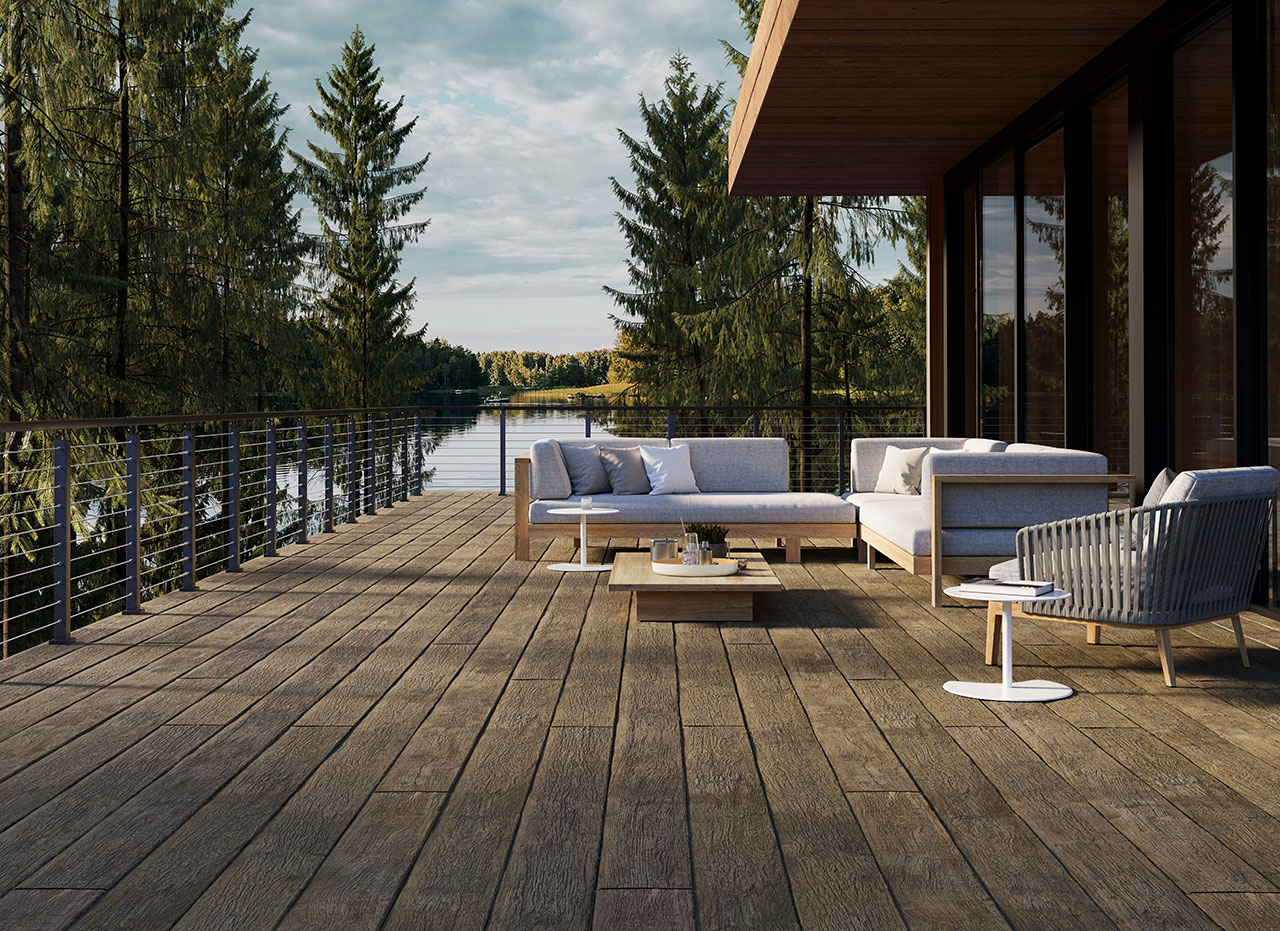
Since there’s no wood fiber in the board, Millboard can’t rot, swell, or attract insects the way wood-based composites sometimes can over decades of exposure. The surface is finished with a proprietary layer called Lastane®: a flexible, rubber-like coating that provides scratch, stain, and slip resistance while allowing the board to flex slightly rather than crack.
The authentic wood look comes from the manufacturing process. Each board is molded from a real timber “master,” then hand-colored to replicate the tone variation you’d see in natural wood. Since boards aren’t extruded through a machine like most composite decking, no two boards are perfectly identical, which is a great benefit for contractors and homeowners trying to avoid the repetitive, plastic-look pattern that gives away standard composite decking.
What Is Composite Decking Made Of?
Standard composite decking is a wood-plastic composite (WPC), typically made from a blend of reclaimed wood fiber and recycled plastic film that is extruded (pushed through a shaping machine) rather than molded.
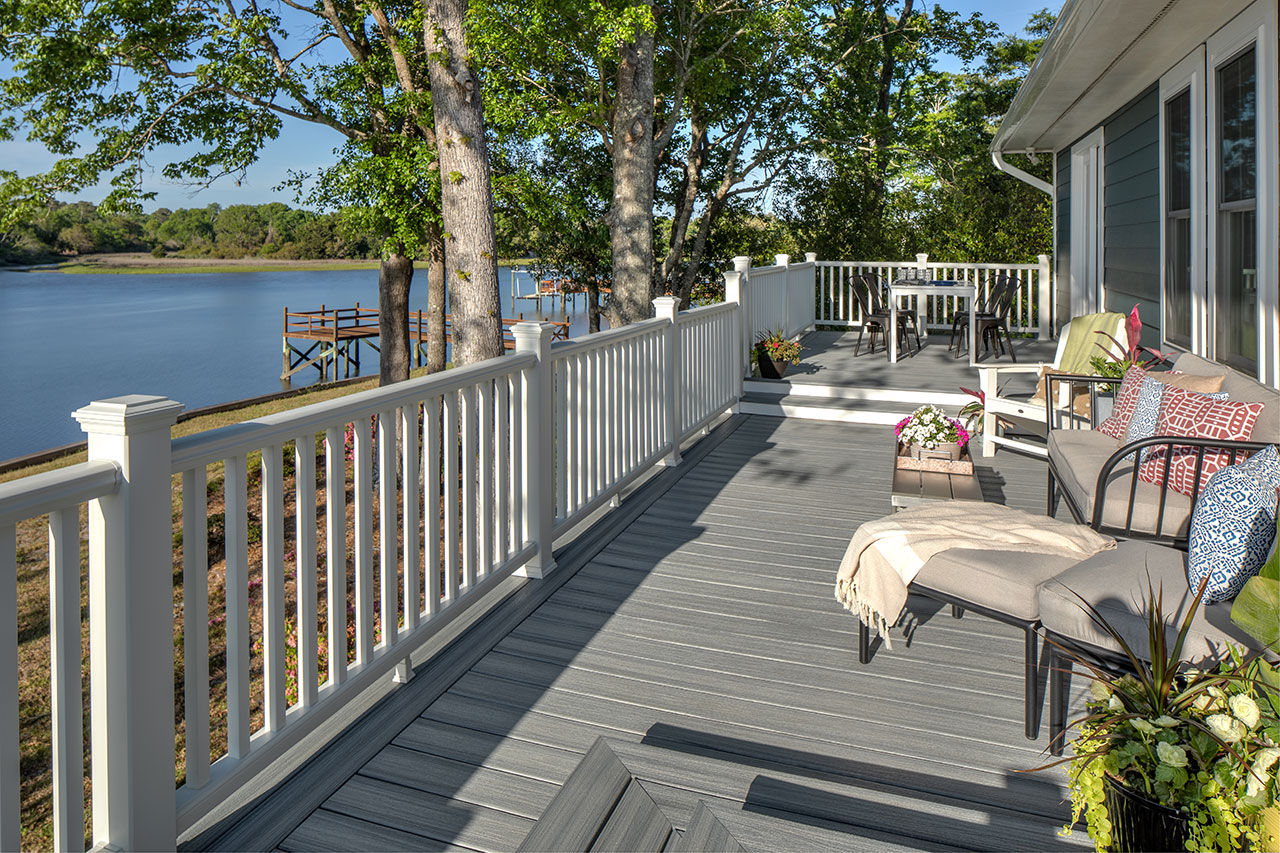
Trex®, the category leader and Northern Building Supply’s most purchased decking brand, builds its boards from roughly 95% recycled wood and plastic. On premium lines like Trex Signature® and Trex Transcend®, the board is wrapped in a capped shell, which is a protective polymer layer bonded around some or all sides of the board. This is what gives composite decking its resistance to fading, staining, and scratching. Entry-level lines like Trex Enhance® use less capping, which keeps the price down but trades off some of that protection.
The result is a decking material that looks like wood, resists the maintenance headaches of wood, and comes in dozens of colors at a price point that’s accessible for most residential budgets.
Millboard vs. Composite Decking: Full Comparison Table
| Factor | Millboard | Composite Decking |
| Core Material | Recycled minerals + polyurethane resin (wood-free) | Recycled wood fiber + plastic |
| Manufacturing | Hand-molded from real oak masters | Extruded through a forming machine |
| Durability | Won’t rot, warp, or attract insects; ~0.2% dimensional movement | Highly durable on capped lines; some movement with temperature swings |
|
Material Cost (per sq. ft.) |
Premium pricing above Trex Transcend®; confirm current rate with your distributor | ~5-$15, depending on collection |
| Fade Resistance | UV-stabilized; designed to weather gradually and intentionally | UV-inhibited cap layer; 25-year fade/stain warranty on select lines |
| Slip Resistance | Among the highest in the category via the Lastane® surface, even wet | Good on textured/capped lines; varies by collection |
|
Warranty (residential) |
25-year limited structural warranty | Varies by brand and collection; typically up to a 50-year limited warranty on premium lines |
| Est. Lifespan | 25-35 years | 20-25 years on capped composite lines |
Good to Know: Warranty terms and estimated lifespans can vary by product line, region, and installation method. We recommend confirming current documentation directly with a Northern Building Supply decking specialist before finalizing specs on a project. Talk to our team →
Millboard vs. Composite Decking Costs
Millboard is typically more expensive than standard composite decking. Here’s how that cost breaks down.
Material Costs
Composite decking typically runs $5-$15 per square foot, depending on the collection. Trex® has this nifty cost calculator tool you can try to get an estimate.
Millboard, as an imported (from the U.K.) and hand-finished luxury product, generally prices well above premium composite material costs. Expect to pay a meaningful premium over Trex® lines for the equivalent square footage.
Note: Current U.S. Millboard pricing should be confirmed with your distributor, as it isn’t publicly listed and varies by collection and order volume.
Labor Costs
Millboard and composite decking install without specialty tools, but labor rates for premium composite and resin-composite decking may run $10-$25 per square foot, depending on project complexity, framing condition, and region. Custom subframes (like aluminum or recycled-plastic systems Millboard supports) can add to labor time compared to standard joist framing.
Wait: Building near water or an elevated deck? Both material and labor costs typically climb 10-20% for coastal exposure requirements or elevated structural framing.
Lifecycle Costs
Over a 25- to 30-year ownership period, both decking materials require minimal upkeep (no staining, sealing, or sanding), so the total cost of ownership gap narrows considerably compared to the upfront price difference.
For a client who’s already committed to a premium composite deck build, the incremental lifecycle cost of stepping up to Millboard is smaller than the sticker stock suggests, especially when the deck is a visible and high-traffic feature of the home.
Build your dream deck with help from our
How Do Millboard and Composite Decking Perform in Northern Michigan Weather?
Decking for Coastal & High-Humidity Environments
For waterfront properties along the Grand Traverse Bay or Lake Michigan shoreline, both premium composite and Millboard are strong choices. Millboard and composite decking handle moisture well, but they get there differently.
- Millboard’s wood-free resin-mineral core is completely non-porous, so it won’t swell, rot, or develop the algae growth that can affect wood-based decking near water.
- Composite decking with a full cap, like Trex Transcend® or Trex Signature®, is also highly resistant to moisture intrusion, though entry-level uncapped lines are more vulnerable over time in consistent humid conditions.
Decking in High-Heat & Direct-Sun Exposure Environments
Composite decking has historically run hotter underfoot than wood in direct sun, which is why Trex® developed SunComfortable™ heat-mitigating technology for its Transcend Lineage® line.
Millboard’s resin-mineral surface also absorbs heat in direct sunlight, particularly in darker colors, and the manufacturer recommends footwear on hot, sunny days.
Neither material eliminates heat buildup entirely. If your deck gets all-day sun exposure, a lighter color material or a heat-mitigated Trex® collection is worth a look.
Decking in Freeze-Thaw Cycles (Michigan Winters)
Wood and lower-grade composites can experience swelling and contraction through repeated freeze-thaw cycles, which over time loosens fasteners and opens gaps.
Millboard’s resin-mineral core moves less than 0.2% dimensionally, making it one of the most stable options through Michigan’s winter-to-summer swings.
Premium capped composite lines also perform well through freeze-thaw cycles, thanks to their non-porous protective shell, though standard gapping guidelines still apply to accommodate normal thermal movement.
More on weatherproof decking materials here →
What Is the Best Decking Material for Luxury Projects?
For any project where the deck functions as a design centerpiece rather than a utility, Millboard is the strongest decking material choice. Its hand-molded authenticity and industry-leading slip resistance are difficult to replicate, and it’s increasingly showing up on plans for high-end builders in the Midwest market.
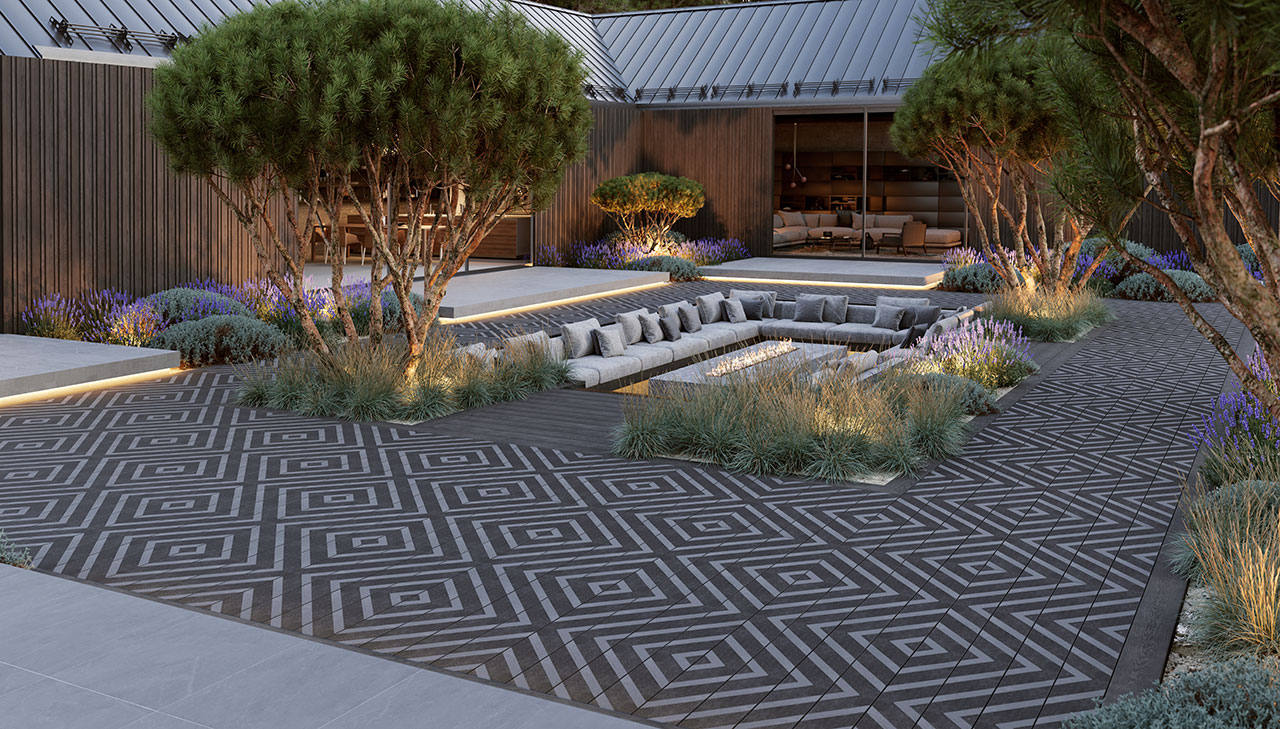
For homeowners who want premium performance, a long track record, and a lower cost of entry without sacrificing too much durability, Trex Signature® or Trex Transcend® deliver a luxury look at a more accessible price. Trex® also has the widest network of installers and retailers backing their warranties.
Shop Millboard & Premium Composite Decking at Northern Building Supply
Whether you’re speccing Millboard for an architect-driven build or comparing premium Trex® collections for a waterfront home, our decking specialists can walk you through samples, pricing, and installation requirements for both.
Contact us online or stop by one of our showrooms to see Millboard and Trex® side by side before you commit.
Frequently Asked Questions About Millboard Decking
Is Millboard decking worth the extra cost?
For architect-specified, waterfront, or high-end builds, most homeowners and builders find the authentic wood-grain look and top-tier slip resistance worth the premium. For budget-conscious luxury builds, premium Trex® lines deliver comparable performance at a lower cost. The right answer depends on how much of a priority the most realistic wood appearance is for the project.
How is Millboard decking installed?
Millboard installs without specialty tools, similar to composite decking, but uses proprietary hidden Durafix® fasteners instead of visible screws. It supports treated timber, recycled-plastic, or aluminum subframes rather than standard joist framing alone.
Is Millboard or Trex® better?
Millboard offers the most realistic wood-grain appearance and the highest slip resistance in the category, making it the stronger pick for luxury and architect-driven projects. Trex® offers proven long-term performance, wider availability, and warranties up to 50 years at a more accessible price point. Neither is universally “better” — it comes down to budget and how much of a priority authentic wood aesthetics are.
How long does Millboard decking last?
Millboard is rated for 25–35 years in normal residential use and is backed by a 25-year limited structural warranty. Its wood-free resin-mineral core won’t rot, warp, or attract insects, which supports that long lifespan even in Michigan climates.
What is the best composite decking on the market?
Trex® is widely considered the category leader in composite decking, with Trex Signature® and Trex Transcend® standing out as the top-performing lines for durability, fade resistance, and scratch resistance. If a wood-free, hand-molded luxury option is the priority instead of traditional wood-plastic composite, Millboard is the premium alternative to consider.